

Wooden Play Kitchen Set for Kids 3+ (Accessories Guide)
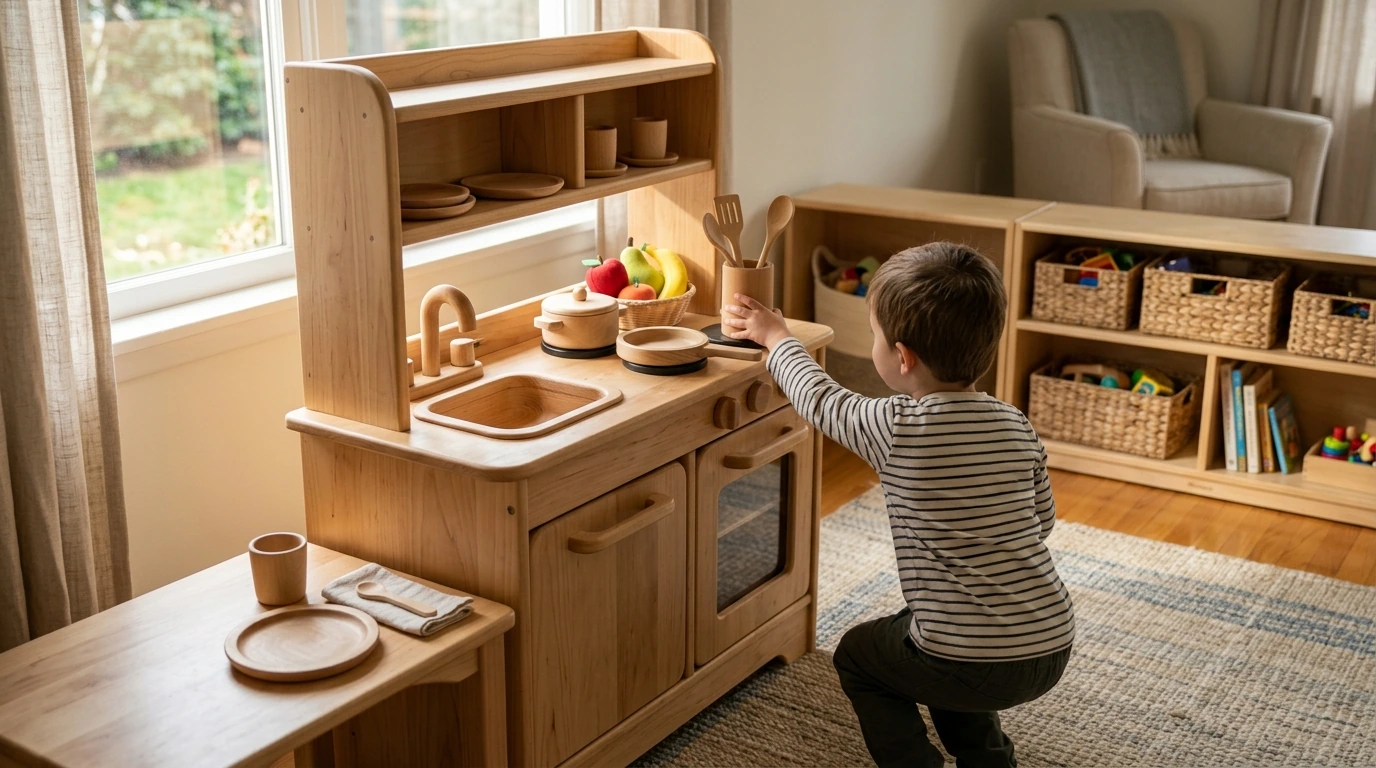
Wooden Play Kitchen Set with Accessories for Kids 3+
A wooden pretend kitchen can turn everyday play into hands-on learning, from practicing routines to building language and social skills. A well-made set gives kids a place to “cook,” “serve,” and “clean” in a way that feels real—but stays simple enough for preschoolers to manage independently. Below is a practical guide to choosing a wooden play kitchen for ages 3+, what accessories matter most, and how to set it up so it stays fun (and not a clutter magnet).
What Makes a Wooden Pretend Kitchen Great for Ages 3+
For many kids, age 3 is when pretend play becomes more detailed—storylines get longer, roles become more defined, and “helping” starts to mirror real routines. A wooden kitchen set supports that development in a few key ways.
- Encourages role-play skills: Kids practice communication, turn-taking, and cooperative play when they “take orders,” share cookware, or serve a sibling.
- Builds fine-motor control: Turning knobs, opening doors, placing plates on shelves, and organizing accessories all strengthen hand coordination.
- Supports routine and sequencing: Wash, prep, cook, serve, and clean becomes a familiar (and low-pressure) flow kids can repeat.
- Often sturdier for everyday use: Wooden construction can feel more stable for frequent play and for homes with multiple kids.
- Accessories spark better stories: Food pieces, utensils, and serving items naturally lead to menus, customers, recipes, and problem-solving moments.
For general play and development guidance, it helps to keep an eye on age-appropriate expectations and milestones from trusted sources like the CDC child development milestones.
What’s Included: Accessories and Play Features to Expect
Most pretend kitchens share a familiar layout, but the day-to-day enjoyment often comes down to how the accessories and moving parts work together. Look for a setup that feels intuitive—kids should be able to reach shelves, open doors without struggling, and clean up without adult “rebuilding” afterward.
Common components
- Cooktop/stove area
- Oven door and/or cabinet storage
- Sink area
- Display shelves or a small counter
Interactive details that keep play going
- Knobs that turn smoothly: A simple twist adds a “real” feel without needing batteries.
- Doors that open/close cleanly: Better hinges reduce frustration and help prevent pinched fingers.
- Stable shelving: Wobbly shelves quickly become a tipping and dumping hazard during energetic play.
Accessory Checklist for Pretend Cooking Play
| Accessory Type | Why It Matters | What to Look For |
|---|---|---|
| Cookware (pots/pans) | Supports cooking sequences and sharing roles | Smooth edges, easy-to-grip handles |
| Utensils (spatula, spoon) | Fine-motor practice and realistic routines | Sturdy material, no sharp points |
| Pretend food | Sorting, naming, and storytelling | Chunky pieces for small hands; easy to clean |
| Serving items (plates/cups) | Encourages hosting, manners, and social play | Stackable shapes; durable finish |
| Storage pieces (bins/hooks) | Helps teach clean-up habits | Kid-height access; clear organization |
Safety and Durability Checklist
Pretend kitchens are high-touch toys—kids lean on them, tug doors open, and carry accessories all over the house. A few quick checks can help the set stay safe and sturdy over time.
For broader toy safety recommendations, the U.S. Consumer Product Safety Commission (CPSC) is a reliable reference point for parents and caregivers.
How to Set It Up for Longer, Happier Play
Play-based learning is also strongly supported by pediatric guidance, including the American Academy of Pediatrics’ discussion of the power of play.
Gift and Room Fit Guide
Wooden Play Kitchen Set with Accessories – Pretend Kitchen for Kids 3+
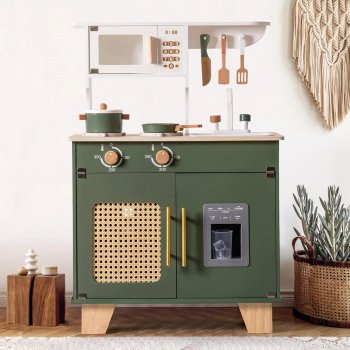
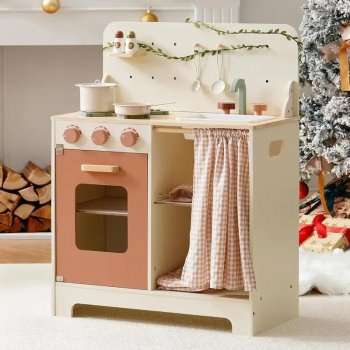
If you’re looking for a hands-on, kid-friendly setup, the Wooden Play Kitchen Set with Accessories – Pretend Kitchen for Kids 3+ is designed for imaginative role-play with an easy-to-use layout and included accessories. It’s a practical choice for solo play, sibling play, and parent-child interaction—especially when paired with a simple organization system (like labeled bins nearby) to keep pieces together between play sessions.
Quick Product Snapshot
| Item | Details |
|---|---|
| Product | Wooden Play Kitchen Set with Accessories – Pretend Kitchen for Kids 3+ |
| Price | $82.17 USD |
| Availability | In stock |
More In-Stock Picks for a Play-Friendly Home
- Luxe Marble-Top Iron Side Table for adult-height storage or a “parent café” spot near the play kitchen.
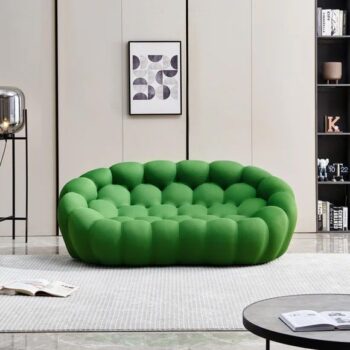
- luxurious-bubble-cloud-sofa to create a comfortable reading and pretend “restaurant waiting area” nearby.
FAQ
What age is a wooden play kitchen best for?
Most wooden play kitchens are best for ages 3+ because kids at that stage can manage small routines and moving parts more safely. If younger siblings are around, supervise closely and limit access to small accessories. Choosing a set with the right height and simpler features helps kids stay independent and confident.
How can accessories be kept from getting lost?
Use a small sorting system: one bin for food, one for cookware, and a cup or hook area for utensils. Label storage spots inside the kitchen cabinets so clean-up is consistent, and rotate a portion of accessories to reduce clutter. A quick end-of-play reset keeps pieces from drifting into other rooms.
What safety checks should be done after assembly?
Confirm the kitchen is stable on the floor and tighten all screws and fasteners, then re-check them periodically after weeks of play. Inspect hinges and doors for pinch points and make sure knobs and small parts can’t be pulled off easily. Remove and replace any damaged accessories right away.













Leave a comment
You must be logged in to post a comment.